Migrate Gliffy diagrams from Data Center to Cloud
Gliffy for Confluence is available for Confluence Data Center and Confluence Cloud.
Since Gliffy diagrams are stored as Confluence attachments on the page where they were created, your diagrams will be migrated even if you set the Gliffy app to "not needed" in the CCMA (Confluence Cloud Migration Assistant). However for your diagrams to work correctly in the Cloud, you do need to set the Gliffy app to “is needed” in the CCMA. The best way to ensure a successful migration of all your Gliffy diagrams is to follow the instructions in this article.
If you would like details on how Gliffy diagrams are saved in Confluence, see Gliffy diagrams on the Confluence attachments page.
Prerequisites
You must complete all of the following tasks before starting the migration to ensure it succeeds:
Update the Gliffy Diagrams for Confluence Cloud app
Migration requires Gliffy for Confluence Cloud app version 3.0.0 or later.
Update the Gliffy for Confluence plugin
Migration requires the following versions of Gliffy for Confluence Data Center:
-
12.2.0 or later for Confluence 9
-
13.1.0 or later for Confluence 10
 Check the system status
Check for upcoming outages or planned maintenance outages of the Gliffy system. See Checking the system status of Gliffy.
Uninstall and reinstall the app if you renamed the target Cloud site URL
If you rename your target Cloud site URL after installing the Gliffy Cloud app, you need to uninstall the Gliffy Cloud app and reinstall it before doing the migration.
Review custom libraries in Confluence Data Center
If the Gliffy app for some reason does not migrate all the custom libraries correctly, you need to manually re-create the custom shape libraries. Therefore, before you migrate, review your custom libraries in Confluence Data Center.
-
Open the Gliffy editor in your Confluence Data Center instance.
-
Select More Shapes in the left-side menu.
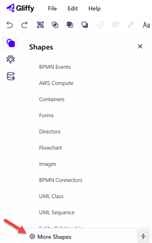
-
Look for Custom Libraries. If there are any, they will be listed above the default Gliffy libraries.
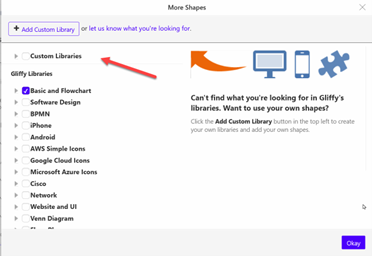
-
Expand the Custom Libraries list and take a screenshot or manually record the libraries names for comparison after the migration.
Migrate Gliffy diagrams
Follow these steps:
-
Verify that your source and target Confluence instances have the Gliffy for Confluence plugin installed. The source must be using the latest version of Gliffy. To update it to the latest version, follow the instructions in Update the Gliffy for Confluence plugin.
-
Use the Confluence Cloud Migration Assistant to migrate the diagrams. To ensure that diagrams are migrated, specify the option to migrate attachments. For detailed instructions, go to the Atlassian website and see Use Confluence Cloud Migration Assistant to migrate.
You can migrate all your Confluence spaces at once or, just some of the spaces in batches.
To migrate your spaces in batches, set the Gliffy App in the Confluence Cloud Migration Assistant to not needed, except for the last batch. For the last batch, set the Confluence Cloud Migration Assistant to Gliffy is needed. -
If a link gets broken, manually edit the Gliffy diagram that includes the link and update the link to point to the new page.
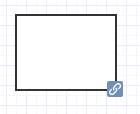
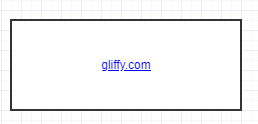
Linked shapes are identified with a link icon in the lower-right corner, and linked text is identified with blue underlining as shown in the following image. For instructions about updating links, see Link objects and diagrams or Link text.
Post-migration functions
If you met the prerequisites before the migration, the CCMA then:
-
Migrates all customers data
-
Re-indexes diagrams to support search functionality
-
Ensures that linked diagram macros function properly so that diagrams display on the Confluence page
The Gliffy app then migrates the custom libraries. If the Gliffy app for some reason does not migrate all the custom libraries correctly, you need to manually re-create the custom shape libraries.
Verify that Gliffy custom libraries migrated from Confluence Data Center to Confluence Cloud
-
Open the Gliffy editor in your Confluence Cloud instance.
-
Select More Shapes in the left-side menu.
-
Compare the list of Custom Libraries against your saved list from Confluence Data Center.
If the Custom Libraries are missing after the migration, you can retry the migration or manually rebuild the libraries.
Retry Migration
Re-run the migration, without selecting any spaces or users. This may trigger the migration of previously missed Custom Libraries.
Manually rebuild the libraries
Follow the steps in the Add custom shape libraries article to manually recreate the libraries on Confluence Cloud.
Troubleshooting
If the migration is stuck at 0%, verify that you completed all prerequisites in this article and restart the migration.
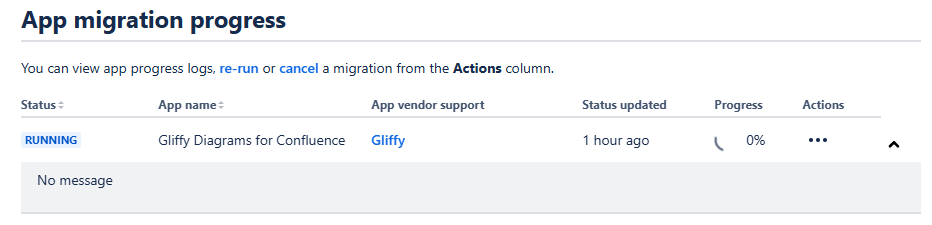
You can also run pre-migration checks in the CCMA. Fix any issues it reports and restart the migration.